Ten students from Pasadena's Polytechnic School are racing a solar-powered car they built from scratch across 631 miles of open Texas highway, starting Sunday, July 19.
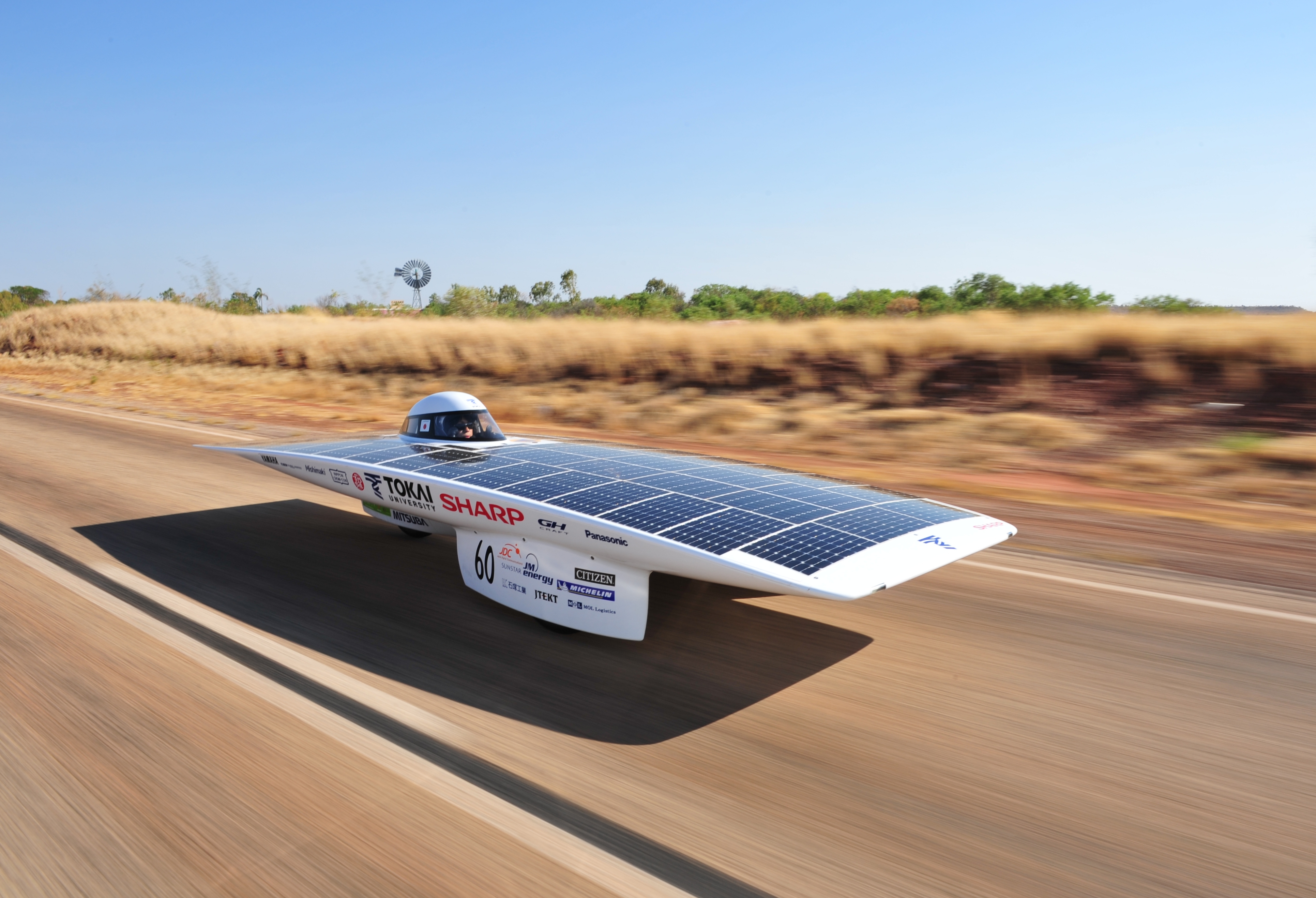
The car, Perihelion, weighs about 750 pounds, stretches 16 feet long, and runs on 468 solar cells feeding a 5.1-kilowatt-hour battery. Its catamaran-shaped body hides an underbody wind tunnel for aerodynamics, and the students kept it light with bike suspension forks and go-kart brakes.
This is Polytechnic's third year in the Solar Car Challenge, but the first time the team faces a road race instead of a closed track. The competition alternates formats every year; in 2025, teams raced laps at Texas Motor Speedway. The highway format forced the students to solve a new problem: ride height.
"We needed to adapt a car suspension for the ride height so that it wouldn't scrape as we traversed highway ramps," co-captain Jamie Hsieh, 18, told Pasadena Now. The team machined a custom part to fit mountain-bike forks to the wheels, raising the car's clearance.
Co-captain Evan Chen, also 18, described the iterative frustration of fixing one system only to break another. Adviser Jeff Keltner, a Polytechnic parent who leads the volunteer-driven project, said the school provides insurance and logistics but the engineering belongs to the students.
The team tested Perihelion at the Rose Bowl on July 9 and July 10, running the loop road that includes a roughly 5-percent grade. Keltner said the hill climb was the moment everyone watched. The car topped the grade at 27 mph, well above the race's 20-mph minimum. Under race rules, any car that can't hold 20 mph on a grade must pull over and be trailered.
During those Rose Bowl sessions, Perihelion reached speeds up to 65 mph, according to a Colorado Boulevard report. The students also set up a slalom course in the parking lots to practice quick turns.
The five-day race runs from Fort Worth to Fort Stockton, with public showcase stops in Palestine, Round Rock, Fredericksburg, and San Angelo. The team that covers the most miles over five days wins. Twenty-four teams from seven states are entered, including seven from California, according to race organizers.
Polytechnic finished second in the Advanced Division in 2025 with 763 laps at Texas Motor Speedway, behind the Seattle Solar Car Team. The school also received the 2025 Jarrett Dunn Award for outstanding application of information systems, according to the school's fact sheet.
Both Hsieh and Chen are graduating seniors headed to Columbia University and Washington University in St. Louis, respectively. They leave behind a team of about 20 underclassmen who will take over the project next year.
The race runs through Wednesday, July 23, with results expected the following day.