A federal judge heard arguments Thursday, Sept. 24, on whether to bar immigration agents from making stops without reasonable suspicion across the Central District of California. The case was brought by three Pasadena men detained at a bus stop in June 2025.
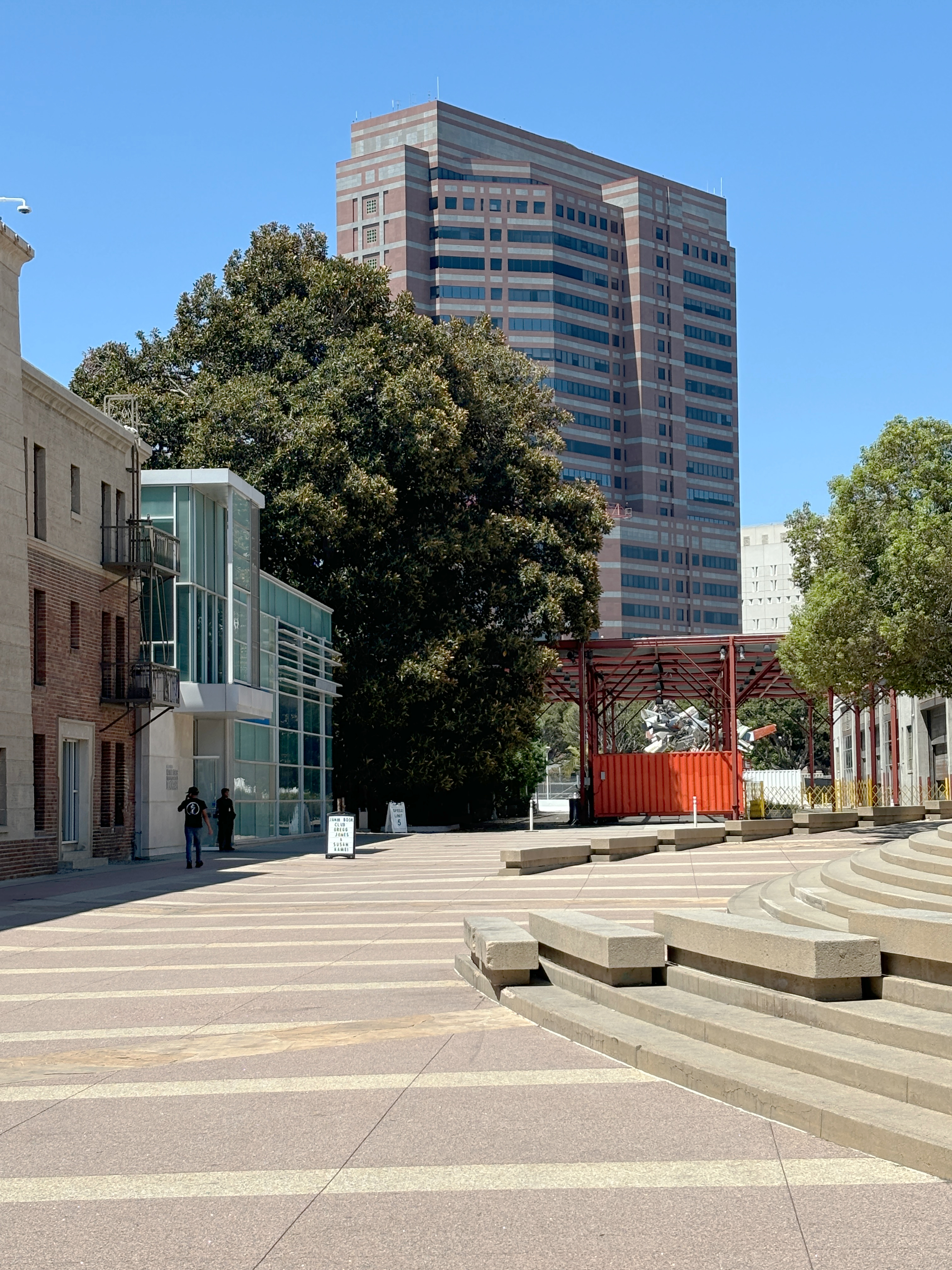
U.S. District Judge Maame Ewusi-Mensah Frimpong presided over the hearing in Vasquez Perdomo v. Mullin at the Felicitas and Gonzalo Mendez federal courthouse in Los Angeles, as the Pasadena Star-News first reported. The Central District covers Los Angeles County, meaning a ruling would directly affect Pasadena.
More than 50 people rallied outside the courthouse before the 10 a.m. hearing. Lead plaintiff Pedro Vasquez Perdomo, 54, of Pasadena, spoke in Spanish to the crowd.
"We come to this country to work, not be treated as criminals," Vasquez Perdomo said.
The case traces to June 18, 2025, when Vasquez Perdomo, Carlos Alexander Osorto and Isaac Villegas Molina were waiting at a bus stop across from Winchell's Donuts on Orange Grove Boulevard at about 6 a.m. They were headed to Altadena for fire-rebuilding work. Four cars pulled up and six masked, armed federal agents emerged without immediately identifying themselves, according to the lawsuit.
What the motion seeks
The 40-page preliminary injunction motion, filed July 27, draws on months of expedited discovery including agent depositions, internal messages and body-camera footage. Plaintiffs' lawyers compiled more than 80 exhibits and 55 sworn community declarations.
The motion argues enforcement has been driven by apparent ethnicity and perceived working-class status rather than individualized investigation. It would also bar agents from relying on someone's perceived Latino ethnicity unless it matches a known target description. The plaintiffs are separately seeking class certification.
According to the motion, officers at the Pasadena bus stop claimed to be looking for a specific target but never returned to search for that person. The lead officer, asked what suspicious people look like, answered "Older Hispanic males," according to the filing. The court has not ruled on these characterizations.
Body-camera footage cited in the motion shows a Department of Homeland Security (DHS) agent telling another to "plug us in wherever you see some tonks," the Star-News reported in July. The ACLU said "tonks" is a derogatory term referring to the sound of a flashlight striking a migrant's head.
In court filings opposing a related injunction, government lawyers argued that ethnicity was one factor among several and that the stops were brief. They wrote that the government has a significant interest in steady enforcement of immigration laws and that Los Angeles remains a priority. DHS Secretary Markwayne Mullin said in a Sept. 17 press release that "every single deportation makes America safer." U.S. Customs and Border Protection did not respond to the Star-News' request for comment on the hearing.
Pasadena's role
The City of Pasadena formally intervened in the lawsuit in July 2025, joining Los Angeles County and several other cities including Culver City, Montebello, Santa Monica and West Hollywood. The court granted the intervention on July 29, 2025.
Pasadena said at the time that it had seen an "unprecedented increase" in federal enforcement activity and that its police officers were being pulled away to determine whether masked, unidentified men in unmarked vehicles were federal agents.
A broader legal fight
Thursday's hearing is separate from a related injunction Judge Frimpong granted Sept. 2. That order requires immigration agents to obtain a warrant before making arrests unless they can show someone is likely to escape. It was unsealed Sept. 16 and covers the same seven-county district.
A review of 113 arrest records cited by the ACLU found nearly 80% either contained no escape-risk assessment or relied on standardized language.
The U.S. Supreme Court stayed Judge Frimpong's earlier July 2025 temporary restraining order in September 2025 without explanation. The judge has since written that it is impossible to know the basis for that decision.
The court has not yet ruled on the motion heard Thursday.