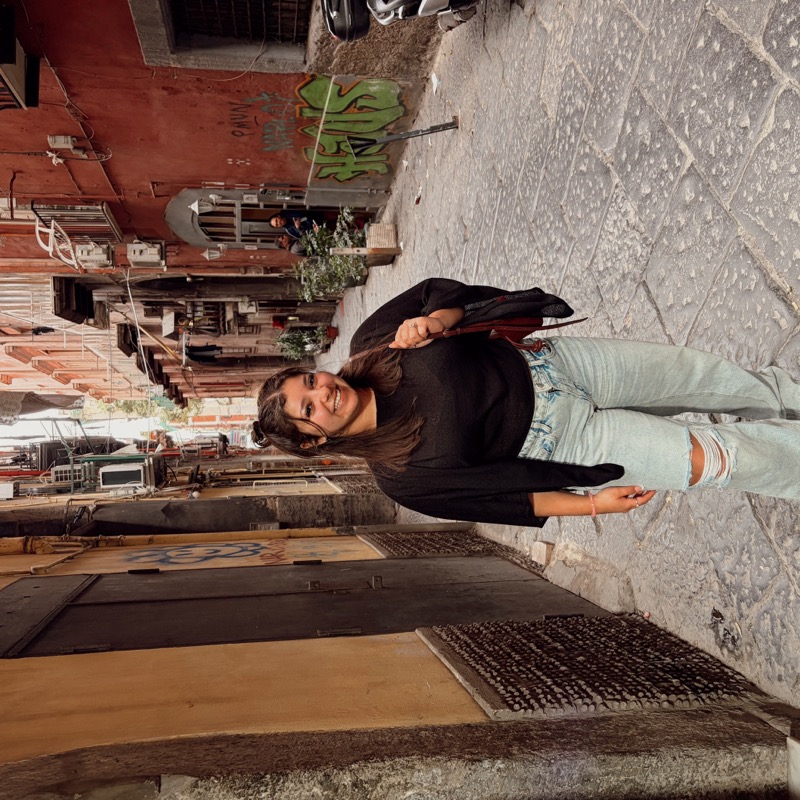
A car came up behind Cavon Hajimiri silently while he walked with a friend near his La Cañada Flintridge home four years ago. He was 13. He never heard it.
"I completely missed the car, and I didn't hear it coming at all," Hajimiri said.
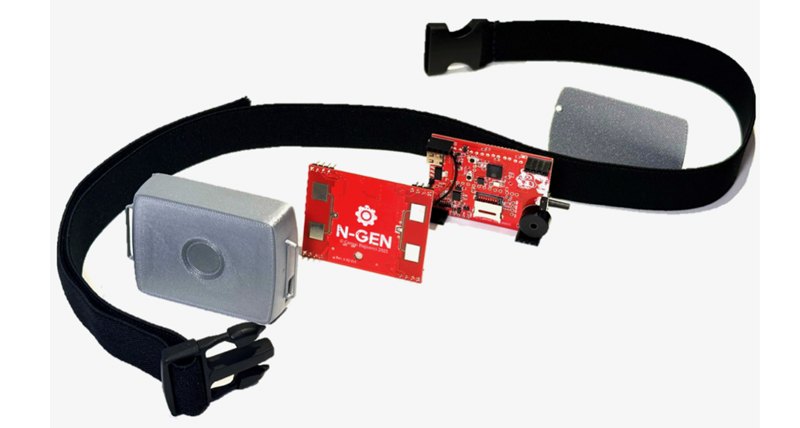
That near-miss sent the Polytechnic School student on a four-year quest to build what didn't exist: a wearable radar that warns pedestrians when a vehicle is approaching from behind. He calls it Hindsight.
The device, worn at the waist and small enough to fit under clothing, uses a custom Doppler radar and machine-learning software to detect oncoming cars and alert the wearer with a vibration or sound. In real-world testing, it caught all 340 approaching vehicles and gave an average of about seven seconds of warning.
Hajimiri, now 17 and set to begin his senior year at Polytechnic School this fall, took Hindsight to the Regeneron International Science and Engineering Fair in Phoenix from May 9 through May 15. He came home with three awards: first place for the Qorvo Innovator Award, first place for the Association of Old Crows Award, and second place for the Grand Award in Embedded Systems, according to Pasadena Now and the ISEF Grand Awards ceremony transcript. More than 1,700 finalists from 67 countries and regions competed, according to Regeneron and the Society for Science.
He also holds U.S. Patent 12,372,637 as sole inventor.
Four years of dead ends
Hajimiri didn't land on radar first. He tried ultrasonic sensors, which couldn't reach far enough. He tried lidar, which was either too short-range or too bulky and expensive. He tried a commercial radar module and hit its limits. He eventually designed his own radar and signal-processing system from scratch.
The hardest problem: a walking person is constantly moving. Hajimiri added an accelerometer to cancel out the wearer's own motion, then built a machine-learning model trained on more than 170,000 frames of data he collected and labeled himself. No dataset for this scenario existed.
He once ordered the wrong circuit board and the radar wouldn't run at all. New tariffs meant paying extra for components and fighting through customs. He sank hundreds of hours into approaches he ultimately threw away.
A Polytechnic School teacher with high-frequency electronic design experience from the Jet Propulsion Laboratory mentored Hajimiri on the radar hardware. Another teacher introduced him to the science-fair system.
Why it matters in Pasadena
The invention lands in a city actively confronting pedestrian safety. Pasadena's City Council adopted its Focused Local Roadway Safety Action Plan in October 2025, committing to zero traffic fatalities by 2035. City collision data from 2020 through 2024 shows pedestrian crashes account for 11% of injury collisions but 28% of fatal and severe ones.
Hajimiri collected much of his test data on Pasadena streets. He said he hopes the manufacturing cost can eventually fall below $10 per unit to reach "the people who need it the most … regardless of their income."
His next step is a pilot program. CBS LA reported on Saturday, July 5, that Hajimiri is seeking volunteers to test and rate Hindsight. He has built a survey to recruit testers and said he wants Pasadena to be one of the pilot locations. No formal city partnership or pilot launch date has been announced.
"I'm really looking forward to finding a way to work with the city of Pasadena," Hajimiri said.