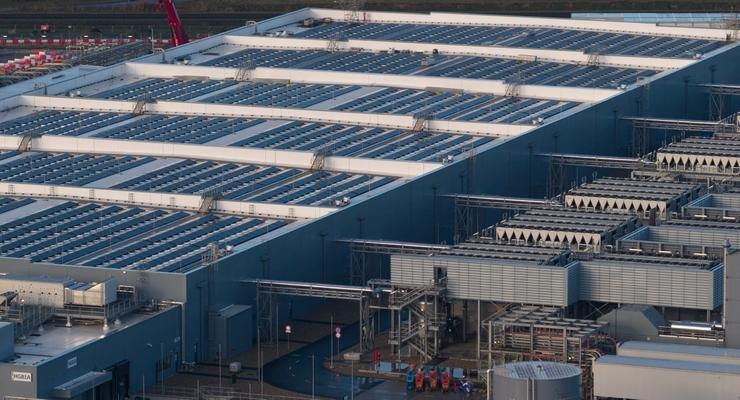
A single large data center could consume more than a third of Pasadena's electricity supply. On Wednesday, July 8, the Planning Commission began figuring out what to do about that.
At a study session in Council Chambers, commissioners reviewed a draft framework that would, for the first time, define "data center" in the city's zoning code and set thresholds for power, water and size. No vote was taken. No data centers were approved. But the definitions being discussed will shape where and under what conditions these energy- and water-hungry facilities could eventually land in Pasadena.
Acting Planning Director Jason Mikaelian wrote in his staff report that "even if data centers remain unpermitted citywide, staff still recommends adding a clear land use definition for this use" to prevent ambiguous interpretations if a developer applies.
Two tiers, three triggers
The draft language creates two categories. A "Limited" data center would be under 5,000 square feet, incidental to a primary use, draw less than one megawatt of electricity and use no more than 50 gallons of water per minute on an annualized basis. Think a server room tucked inside an office building.
A "General" data center would trip any one of three triggers: one megawatt or more of electrical capacity, water use above 50 gallons per minute, or a site of one acre or more. Commercial cryptocurrency mining would count as a data center under either tier.
Where they could go
If the city eventually permits data centers, the staff report identifies potential locations: industrial land and the commercial, commercial-flex and industrial-flex zones within the South Fair Oaks, Lincoln Avenue, Lamanda Park and Fair Oaks/Orange Grove specific plan areas. Public and semipublic land and certain planned developments are also on the list.
A narrower option would let institutions with existing master plans, such as Caltech and Huntington Hospital, host data centers as an accessory use.
Why it matters for ratepayers
Pasadena Water and Power engineer Kimberly Huynh told the Municipal Services Committee on Tuesday, March 10 that a 50-megawatt data center "can consume around 36% of the entire Pasadena system load," equivalent to powering 41,000 homes or 115,000 electric vehicles. PWP General Manager David Reyes confirmed at the same briefing that no location in the city could serve a 25-megawatt load.
PWP's import capacity from the regional grid tops out at about 280 megawatts, and peak demand already reaches 330 megawatts, according to the March 10 briefing.
Under Pasadena Municipal Code Section 13.04.75, any new customer seeking 10 megawatts or more of peak demand must sign a long-term contract with PWP.
Regional context
Pasadena is not acting in a vacuum. Monterey Park voters approved a permanent data-center ban, Measure NDC, in June 2026 with about 88% support. Montebello, El Monte and Baldwin Park have adopted temporary moratoriums. Councilmember Jason Lyon said at the March 10 committee meeting that the city needs to "move rapidly on the zoning piece of this. I'm not comfortable saying it's just another office use. It's not."
What comes next
Staff will conduct further analysis, return to the Housing, Homelessness, and Planning Committee for an update, then bring the matter back to the Planning Commission for formal public hearings. Only after that would the commission make a recommendation to the City Council. No dates have been set for those steps.
Residents can stream meetings at pasadenamedia.org or attend in person at City Hall, 100 N. Garfield Ave., Room S249.