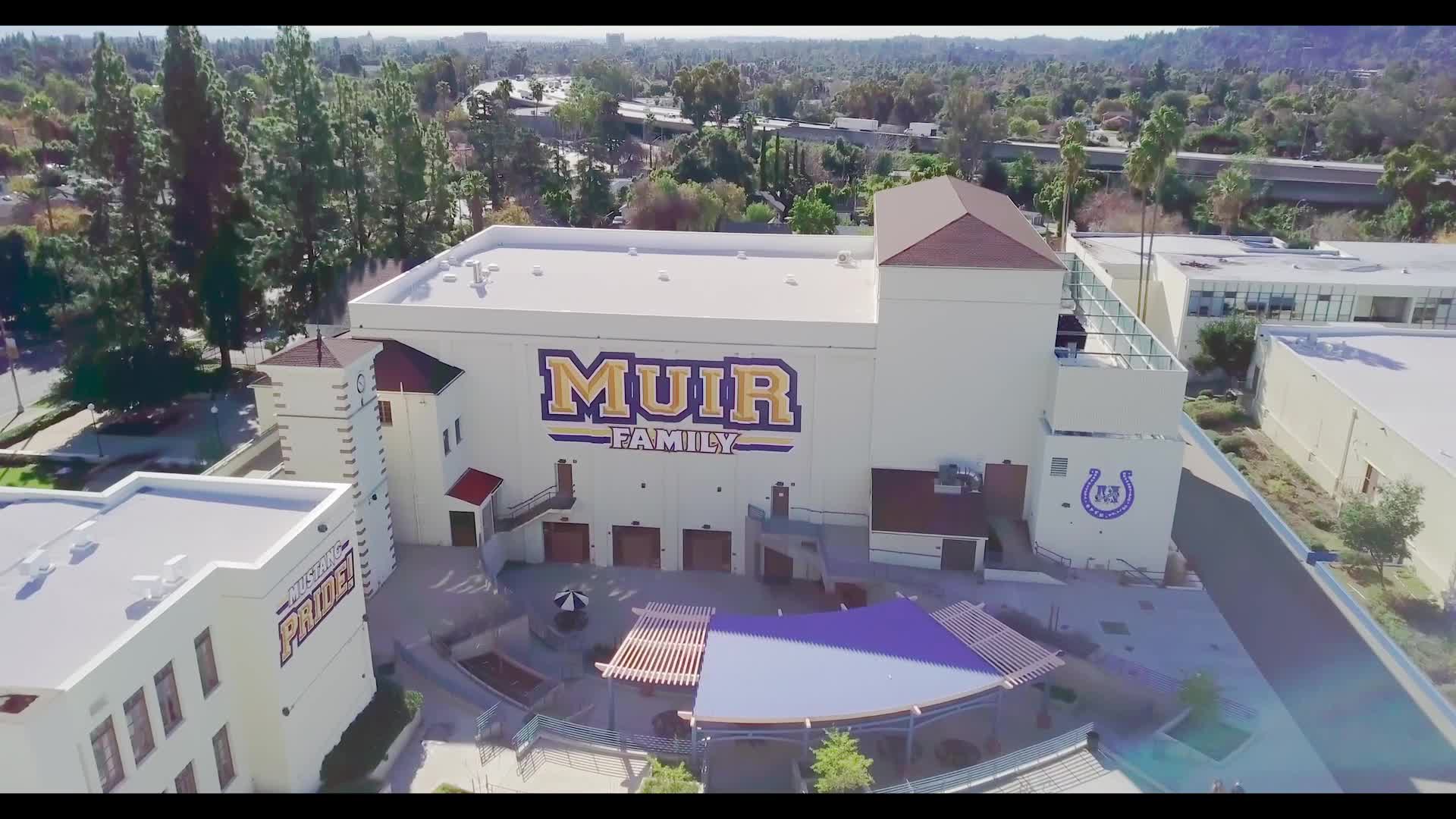
Four protected trees came down at John Muir High School the week of June 30 without city permits, and now Pasadena's City Council is weighing whether to sue its own school district.
The City of Pasadena posted formal stop-work orders at multiple PUSD campuses after district crews continued removing trees in defiance of the city's Tree Protection Ordinance, Lisa Derderian, the city's public information officer, confirmed. The orders prohibit any further tree removal until PUSD obtains the required permits.
The conflict puts families at 11 contaminated campuses in an uncomfortable position: the district says the trees must go to clean up lead and other toxins deposited by the January 2025 Eaton Fire, while city officials and environmental advocates argue the removals are illegal and unnecessary.
What happened at John Muir
Crews felled four trees at John Muir High School during the week of Monday, June 30. According to a stop-work order posted by the city's Planning Department, the district did not have permits for the work. Workers on site told protesters they would be arrested if they interfered, according to Pasadena Now. No one was arrested.
The city had previously sent an arborist to inspect campus trees, but PUSD had the inspector removed from the site. Derderian said the city has not been granted permission to conduct inspections to determine which trees are protected, and the stop-work orders remain in effect.
The district's argument
PUSD maintains the removals are necessary to protect student health and that the work falls under state authority, not city jurisdiction. The California Department of Toxic Substances Control identified areas at 19 campuses where fire-impacted soil contaminant levels exceed state screening thresholds.
But the DTSC did not specifically require tree removal. The agency's position, according to Local News Pasadena, is that contaminants must be addressed while leaving remediation methods to local decision-makers.
The PUSD Board of Education voted on Friday, June 19, to preserve up to 57 protected trees while continuing planned removal of others across the district's 11 remediation sites. Jessica Richards, a member of the city's Urban Forestry Advisory Committee, told the City Council that the DTSC confirmed in writing it does not mandate removing all the trees.
Alternatives on the table
Arborists and environmental advocates have pointed to techniques that could address contamination while saving mature trees, including vacuuming contaminated topsoil, replacing it with clean soil, and protecting root zones during excavation.
Lauren Siegel, chair of the Pasadena Environmental Advisory Commission, said PUSD's consulting firm Verdantis focused too narrowly on soil contamination without weighing the broader health costs of losing tree canopy. "They cited fifty trees for removal at Blair campus alone," Siegel said. "These trees are the farthest from the Eaton Fire, provide a huge amount of shade and cooling, and they are a natural barrier to the noise and gas pollution from the entrance to the 110 freeway and Glenarm Powerplant."
City weighs litigation
Councilmember Rick Cole said PUSD should comply with city law and evaluate the balance between student safety and tree canopy in a way that is public and credible.
The City Council scheduled a special closed-session meeting for Wednesday, July 8, with the agenda item "Consideration of Initiation of Litigation." The city's Public Information Office said any action arising from the closed session will be reported afterward.
PUSD's original remediation plan called for removing approximately 193 mature trees across 11 campuses. Sixteen had already been cut before the board's June 19 vote, sparking weeks of standing-room-only public meetings, children perching in trees to block crews, and peaceful civil disobedience reported across the district by Local News Pasadena.