Five weeks before NASA launches a $4.3 billion telescope expected to measure light from a billion galaxies, the Pasadena scientist running part of the mission will explain what it means — for free, to anyone who walks through the door.
Lee Armus, a senior research scientist at Caltech's IPAC, will give a public lecture on the Nancy Grace Roman Space Telescope on Friday, July 24, at the Cahill Center for Astronomy and Astrophysics, 1216 East California Boulevard. Doors open at 7:30 p.m., the talk starts at 8 p.m., and the evening continues with a Q&A panel and guided stargazing on the athletic fields next to the building.
No tickets. No reservations. All ages welcome.
Why Armus matters to this mission
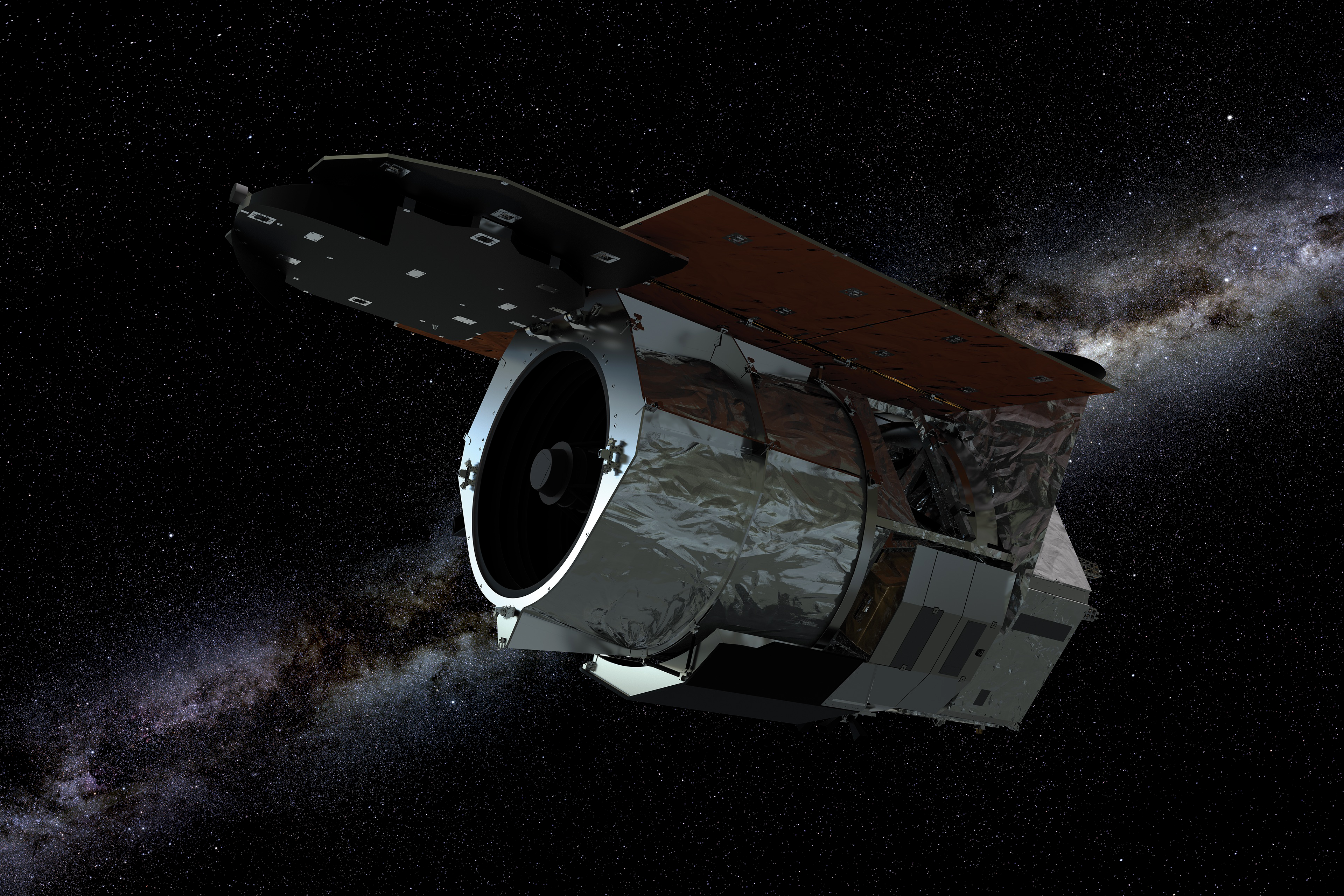
Armus leads the Roman Science Support Center at Caltech's IPAC, one of three centers that will operate the telescope after it reaches orbit roughly 930,000 miles from Earth. The other two are the Space Telescope Science Institute in Baltimore and NASA's Goddard Space Flight Center in Maryland. His team handles the Coronagraph Instrument, processes spectroscopic and microlensing data, manages research proposals from scientists, and conducts public outreach. He also chaired the scientific organizing committee for a Roman science conference held at Caltech the week of July 13.
The telescope itself arrived at Kennedy Space Center in late June and is undergoing about 70 days of prelaunch processing. NASA has scheduled launch for Saturday, August 30, aboard a SpaceX Falcon Heavy rocket from Launch Complex 39A in Florida.
What Roman can do that Hubble cannot
Roman carries a mirror the same size as Hubble's, 2.4 meters across. But its Wide Field Instrument captures a slice of sky more than 100 times larger in a single exposure. Where Hubble stares deep at small patches, Roman will sweep enormous stretches of the universe at comparable resolution.
NASA expects the telescope to discover around 100,000 exoplanets over its lifetime. For context, the NASA Exoplanet Archive listed 6,316 confirmed planets as of Monday, July 7. Roman will also map dark matter, investigate dark energy, and trace how galaxies formed and evolved over billions of years.
The telescope is named for Nancy Grace Roman (1925–2018), NASA's first Chief of Astronomy and the woman known as the "Mother of Hubble" for her role in planning that earlier observatory.
The Stargazing Lecture Series
The July 24 talk is part of Caltech's monthly Stargazing Lecture Series, organized by Cameron Hummels, Caltech's director of astrophysics outreach. The series has run since 2016, drawing the public onto campus for 30-minute talks aimed at a general audience.
"Providing people with their first opportunity to look through a telescope at the Moon or Saturn or some other astronomical object fills me with deep satisfaction," Hummels told Caltech Magazine.
After the lecture and Q&A, attendees can look through telescopes set up on the fields adjacent to the Cahill Center, weather permitting.
How to attend
Residents who cannot make it in person can watch the lecture and Q&A live-streamed on YouTube at youtube.com/live/gGVa-uOXpHY. Parking is free in any Caltech garage or lot after 5 p.m. on weekdays, and street parking on California Boulevard requires no permit. For more information, contact Cameron Hummels at [email protected] or visit outreach.astro.caltech.edu.