Forty mathematicians and AI industry researchers spent four days in late May working through problems that have stumped number theorists for generations, testing whether artificial intelligence can crack them open. Caltech published its account of the gathering on July 8.
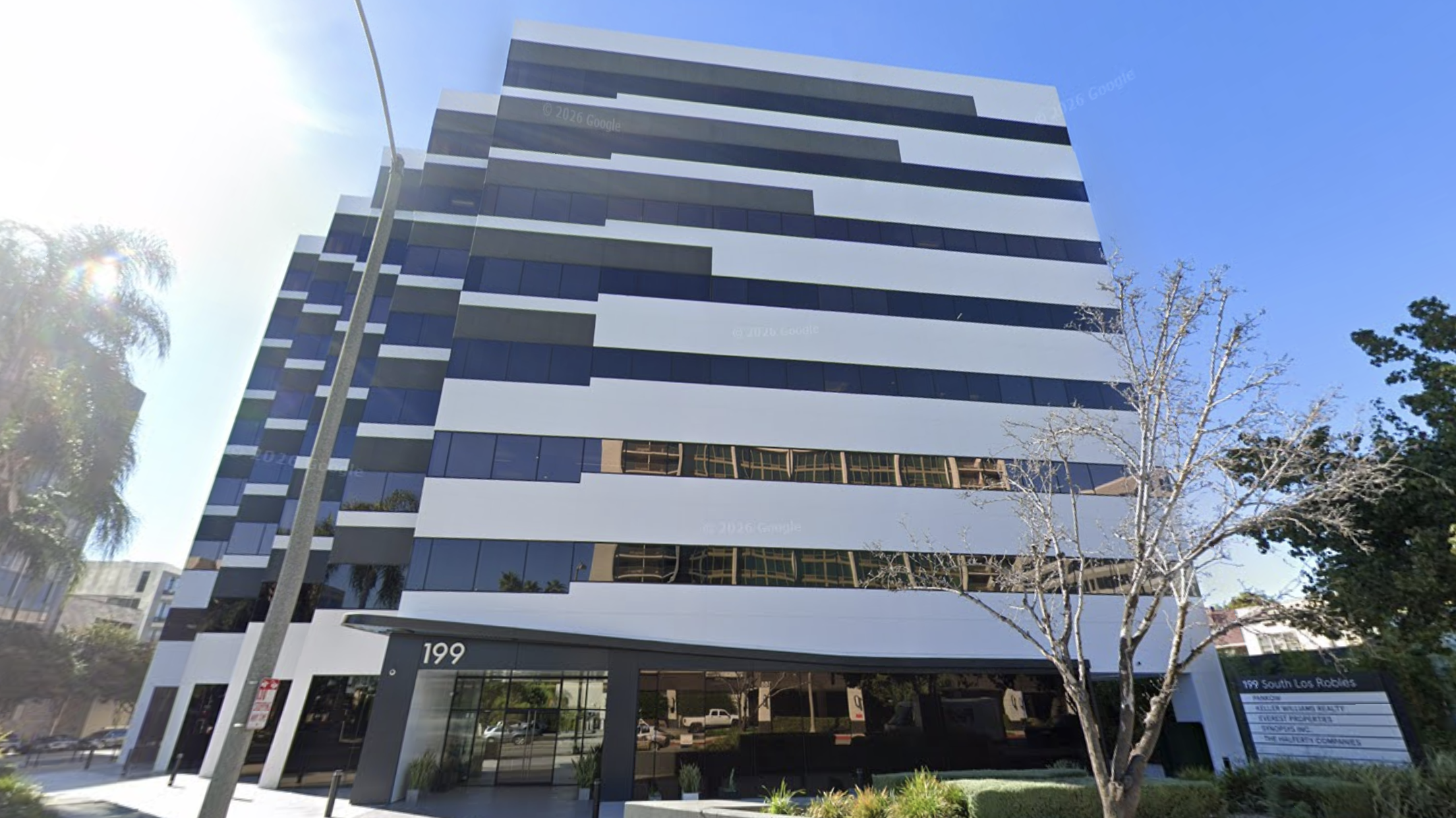
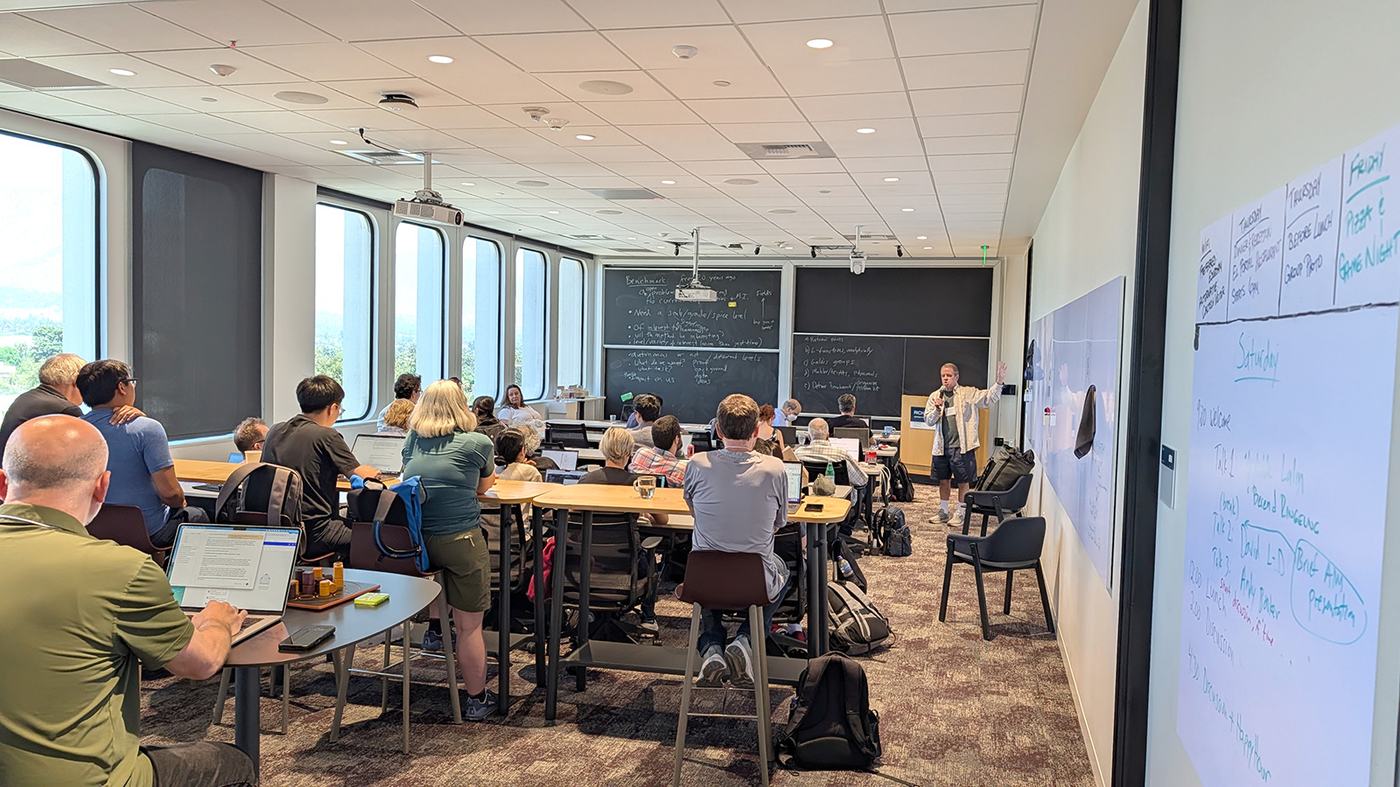
The event at Caltech Hall marked the American Institute of Mathematics' first-ever workshop focused on AI for math, according to Sergei Gukov, the John D. MacArthur Professor of Theoretical Physics and Mathematics and AIM's executive director. Participants traveled from across the United States, Canada, and the United Kingdom to the eighth-floor Merkin Center for Pure and Applied Mathematics.
"The rapid pace of AI development is starting to reshape how we do mathematical research, and many valuable lessons emerged during the event," Gukov said. "I was grateful and excited to see attendees from several industry partners such as Anthropic and Harmonic at the workshops."
The workshop's first afternoon focused on building a list of benchmark problems for AI to tackle. Co-organizer Michael Rubinstein, a professor of mathematics at the University of Waterloo in Ontario, Canada, said the problems ranged from questions that would require "some effort" to ones that have "stumped number theorists for generations."
Andy Booker, a professor of pure mathematics at the University of Bristol in England, presented an approach he developed using Claude Code, an AI coding tool, to study the "Converse Problem for L-functions," a central challenge in number theory. Number theory, the study of integers, underpins modern cryptography and internet security, though many of its hardest questions remain unsolved.
Alex Meiburg, a co-organizer and research engineer at Harmonic who also holds a postdoctoral fellowship at the Perimeter Institute, said AI is accelerating the experimental side of math. He told Caltech the field is "entering a big wave where rapid experimentation and investigation is possible."
AIM moved to Caltech's campus in 2023 after stints in Palo Alto and San Jose. Founded in 1994 by John Fry, co-founder of the now-closed Fry's Electronics chain, the institute is one of seven mathematical sciences institutes funded by the National Science Foundation. It runs a different workshop every other week at Caltech Hall, plus four to six smaller research collaborations called SQuaREs in alternate weeks.
For Caltech's math department, which has fewer than 20 faculty members, the partnership is significant. Professor Elena Mantovan said when AIM arrived in 2023 that the institute's presence would bring "hundreds of top mathematicians" to campus each year, benefiting faculty, postdocs, and students.
The benchmark problems discussed at the May workshop will be posted on AIM's website as an open-access resource.
AIM's next workshop at Caltech Hall, "Fairness and foundations in machine learning," runs Monday, July 13 through Thursday, July 17. A workshop on "Mathematical foundations for AI agents in complex environments" is scheduled for Monday, September 28 through Friday, October 2, and is still accepting applications.