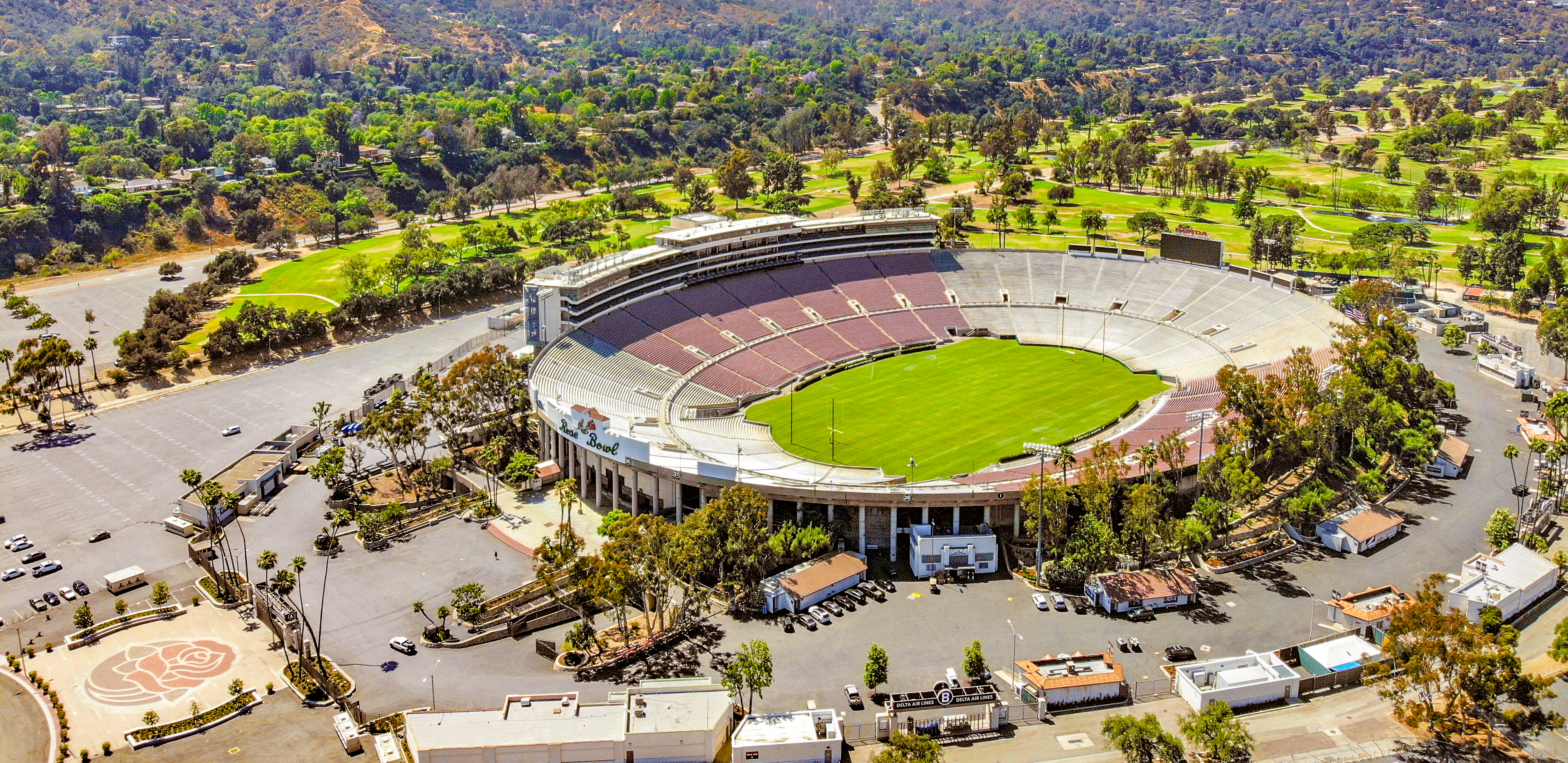
The Rose Bowl Operating Company is spending $80 million to overhaul the stadium, built in 1922, before it hosts Olympic soccer in 2028, CEO Jens Weiden told Forbes in a two-part interview published July 25 and July 29.
The investment, branded the "Lasting Legacy" capital campaign, is the largest modernization push in the stadium's history. It will be funded primarily through private donations raised by the Rose Bowl Legacy Foundation, not from the city's general fund, according to the campaign's official website.
"One of the things when I took over as CEO that became very apparent is that in order to make the changes we wanted to make, we really needed to control our own destiny," Weiden told Forbes in a July 9 interview.
What's already underway
The campaign is split into two phases. Phase I, budgeted at $30 million to $35 million and running from 2024 through 2026, includes six projects. Three are already complete: the East Side Safe Standing Area, a new sound system, and refurbishment of the historic marquee sign. Work on gas and water infrastructure and cellular service upgrades continues.
The centerpiece is the $30 million South End Zone Field Club, which broke ground Jan. 15 and is expected to open before the 2026 college football season. The club will provide premium hospitality for roughly 1,000 guests and create a new player entrance.
Phase II: bigger seats, new video board
Phase II, budgeted at $45 million to $50 million and scheduled for 2027 through 2029, targets two projects the RBOC says are already funded: replacing aging bench seating with wider seats that increase legroom beyond the current 27-inch spacing, and installing a new video board. New vertical aisles will improve accessibility.
The Olympics angle
The Rose Bowl will host Olympic soccer in 2028, making it one of only two venues in the world to host three Olympic Games, alongside the Los Angeles Memorial Coliseum (1932 and 1984). LA28's own investment will add security infrastructure, lighting, and operational systems that stay in Pasadena after the Games end.
"The legacy of these Games isn't just that people attended events. The legacy is that these buildings are left in a better place than when the Games arrived," Weiden said in the same Forbes interview.
Ticket registration for the 2028 Games reached a record 12 million people as of July 30, according to Pasadena Now. Pasadena's Olympics Zone also includes the Rose Bowl Aquatics Center for diving.
How it's paid for
The Rose Bowl is municipally owned but operates through the RBOC, a nonprofit operating company created by the city. Unlike a private franchise, it competes with police, fire, roads, and housing for public dollars. Weiden's strategy relies on multiple revenue streams: growing the venue's annual calendar to roughly 25 major events and more than 200 enterprise events, building hotel-industry partnerships through tourism assessments, and recycling sales tax generated at Rose Bowl events back into stadium improvements, according to Forbes.
Nearly three million people visit the Rose Bowl campus each year for UCLA football, the monthly flea market, the three-mile walking loop, concerts, and community events.
The precise split between public and private dollars in the $80 million total has not been disclosed. The Pasadena Ledger has requested clarification from the RBOC and the Mayor's office.
The RBOC board oversees the campaign on behalf of the city. Residents can follow progress at rosebowllastinglegacy.com. The next RBOC board meeting date was not listed in available city records as of July 31; residents can check the City of Pasadena's commission calendar at cityofpasadena.net for upcoming meeting dates and public comment opportunities.