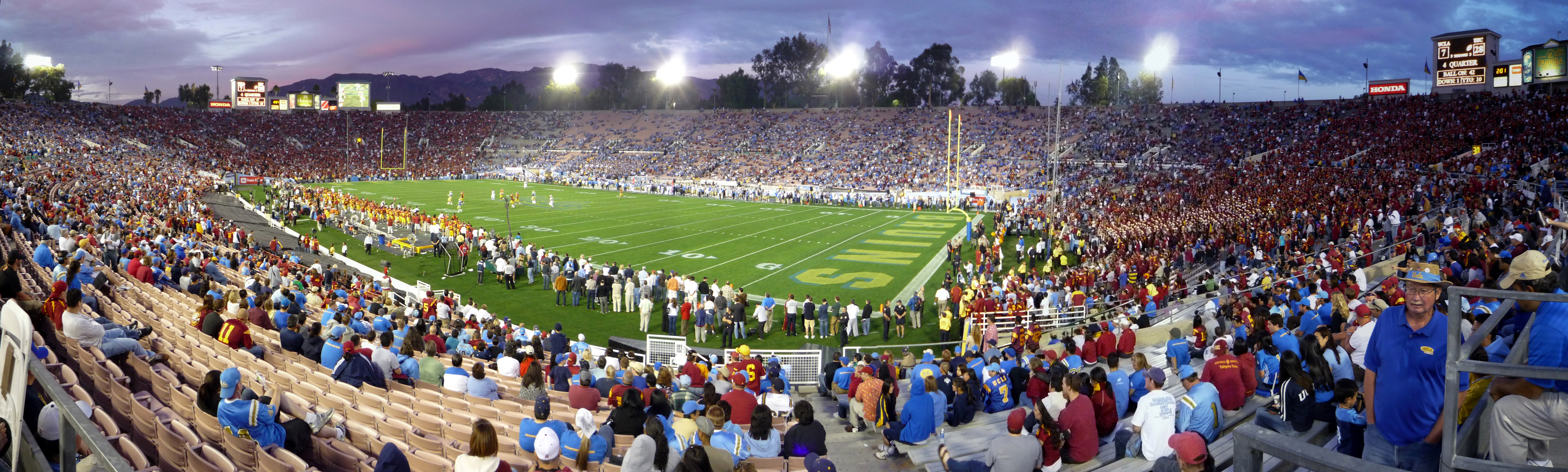
The Rose Bowl faces hundreds of millions of dollars in capital needs over the next 20 years. Its chief executive says the path forward runs through corporate dinners and concerts as much as football.
Rose Bowl Operating Company CEO Jens Weiden told a Wednesday, Sept. 2, City Talk webinar that the 104-year-old National Historic Landmark has shifted its identity. The RBOC now hosts about 150 smaller "enterprise events" each year, generating more than $2 million in net revenue for debt payments and capital improvements, according to Pasadena Now.
"We're not in the stadium business, we're in the events business," Weiden said during the webinar, hosted by District 2 Councilmember Rick Cole.
UCLA football and the Rose Bowl Game remain anchor tenants. But the RBOC's fiscal 2027 budget of $92.9 million, including a $9.9 million capital line, underscores how much the city-owned venue depends on diversified income.
The newest piece of that strategy is already taking shape. The $30 million South End Zone Field Club, which broke ground Jan. 15, converts about 5,000 bench seats into nearly 1,000 premium field-level seats in club and loge boxes. The project, funded through the Rose Bowl Legacy Foundation's Lasting Legacy Capital Campaign, is expected to be finished before UCLA's Saturday, Sept. 12, home opener. Stadium capacity drops from roughly 89,000 to about 85,000, but Weiden said the Field Club will host corporate and charitable events year-round, expanding the enterprise revenue stream.
The RBOC manages a roughly 300-acre campus that includes the stadium and Brookside Golf Course. It has 42 full-time employees who scale to thousands during major events. More than 3 million people use the recreational loop around the Rose Bowl and Brookside annually, Weiden said.
Transportation is shifting too. At recent concerts, nearly 30 percent of patrons arrived by shuttle, up from about 10 percent several years ago. That trend will face its biggest test when the Rose Bowl hosts five Olympic soccer matches during the LA28 Games, including both gold-medal finals on July 28 and July 29, 2028.
Olympic security will place a large perimeter around the stadium, limiting normal parking and circulation. Weiden said shuttle pickup sites could stretch to Dodger Stadium and the Los Angeles Zoo.
Cole, who organized the webinar, framed the stakes in neighborhood terms. He called the Rose Bowl "a public stadium in a public park," contrasting it with the privately owned SoFi Stadium in Inglewood. Weiden described the relationship the same way, saying the Rose Bowl is a neighbor with a big house, a big yard and a lot of parties.
A District 2 forum focused on the Rose Bowl's community benefits is scheduled for Wednesday, Sept. 16, at 7 p.m. at the Jefferson School Auditorium, 1500 E. Villa St. Online participation will also be available.