A Caltech social scientist has helped build a free online tool that forecasts congressional elections on the Nov. 3 ballot, including a baseline forecast that uses no polls.
Jonathan N. Katz, Caltech's Kay Sugahara Professor of Social Sciences and Statistics, co-developed the interactive website ElectIt with Danny Ebanks, a research associate at Harvard University's Institute for Quantitative Social Science (IQSS), and Gary King, the Weatherhead University Professor at Harvard and IQSS director. The team posted its forecasts Oct. 15.
The tool's core model draws on decades of historical data covering every U.S. House election since 1946 and every Senate election since 1954, according to a Caltech news release published Oct. 23. Instead of polls, it weighs factors like past results, whether a candidate is an incumbent and the midterm penalty, the tendency of the president's party to lose support in midterm elections.
"On election night, when the Associated Press starts calling races, you can put them into our app, and it will tell you how the probabilities update," Katz said in the release.
The project grew out of a flaw the three researchers found seven years ago when they tried to update a canonical 1990s model of legislative elections. That older model badly underestimated how often popular incumbents lose their seats, Katz said. It treated events that actually happened in nearly every other election cycle as less-than-one-in-10,000 occurrences.
Their replacement, called LogisTiCC, is described in a paper now under review at the journal Political Analysis.
ElectIt offers three forecast layers. The baseline "post-nomination forecast" uses no polls at all. A second layer adds national generic-ballot surveys. A third folds in available state- and district-level polling. Users can call individual races on the site's interactive map and watch the probabilities shift in real time.
Katz said elections are far more predictable than most people assume, though he cautioned that close races and control of Congress can remain uncertain. He said he hopes people use the tool during election-night watch parties on Nov. 3.
The site was averaging 500,000 Google impressions a day as of Oct. 21, according to Katz.
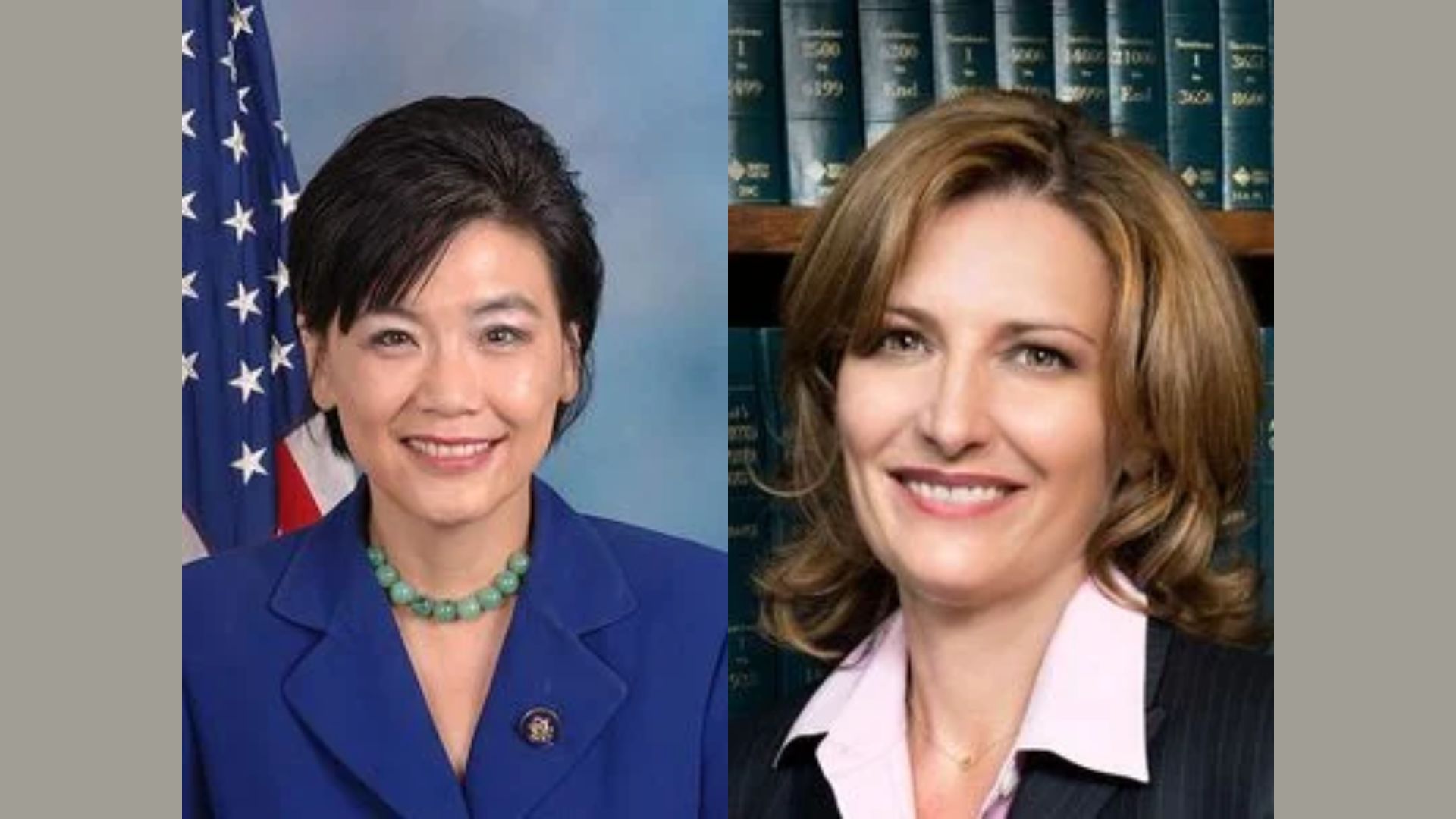
For Pasadena voters, the Nov. 3 ballot includes the race for California's 28th Congressional District. Democratic Rep. Judy Chu, first elected to Congress in 2009, faces Republican challenger April Verlato, a former Arcadia mayor and attorney, according to the Daily News. The district spans Los Angeles and San Bernardino counties and includes Pasadena, Monterey Park and Arcadia. ElectIt's specific forecast for that race was not available in the data reviewed.
Building the model required rewriting it to run on graphics processing units, or GPUs. AI coding tools helped speed that work and backfill historical data such as statewide election results broken down by congressional district.
After Nov. 3, Katz said the team plans to compare actual results against its predictions. Surprises can have ordinary explanations, such as a scandal or an unusually strong challenger, he said, and an unexpected result is not by itself evidence that anything went wrong with the election.