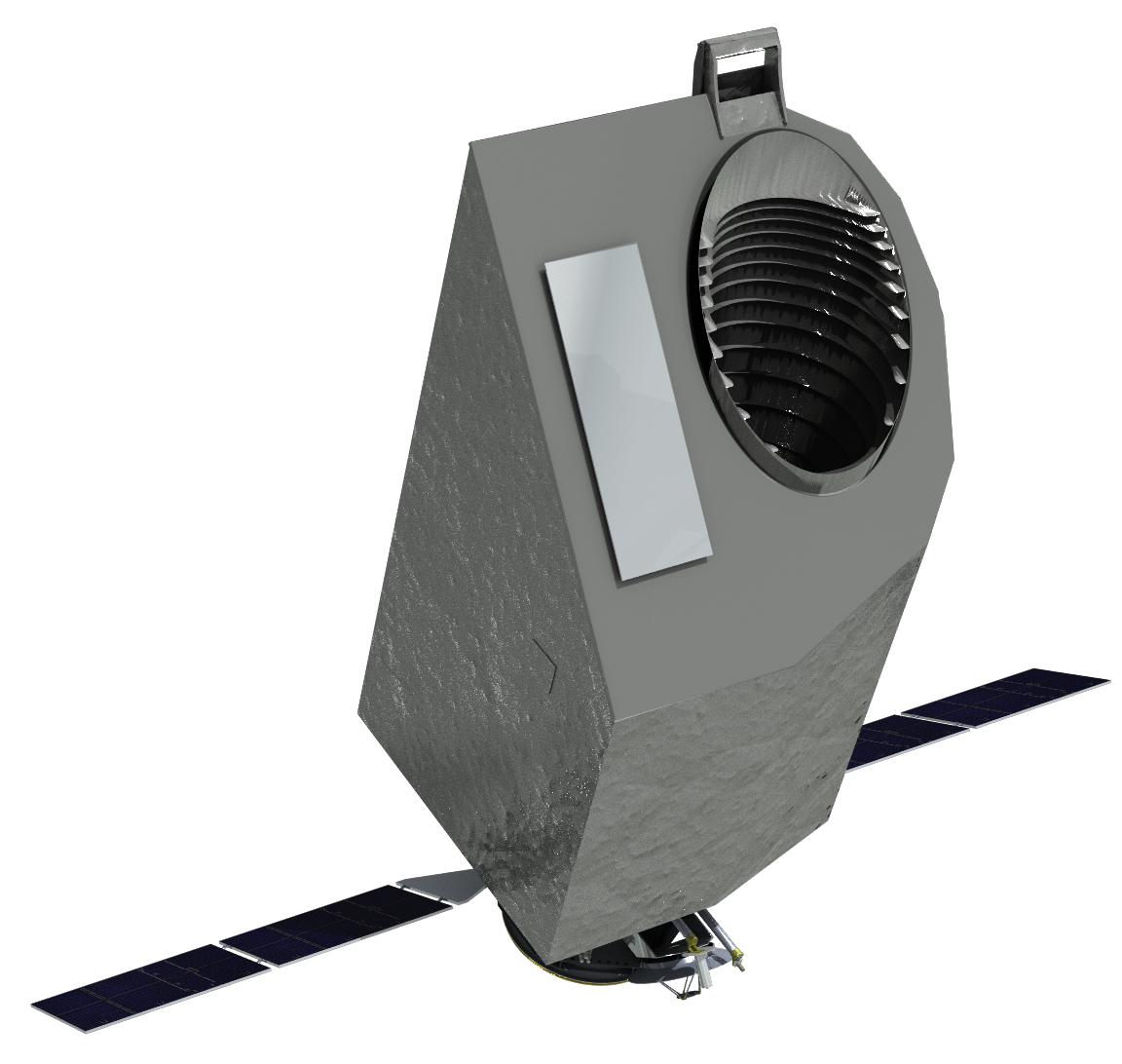
A Caltech physicist will lead a new $590 million NASA space telescope that will produce the first deep maps of the entire sky in ultraviolet light.
NASA on Tuesday, Oct. 27, committed to launching the Ultraviolet Explorer, known as UVEX, by January 2031 after the project cleared a key technical and programmatic review, the agency said. The mission will be up to 100 times more sensitive than its predecessor and will detect stars, galaxies and explosive events too faint to be seen before.
For Pasadena, the stakes are local. Caltech's Fiona Harrison is the mission's principal investigator. NASA's Jet Propulsion Laboratory will provide key detector technology. And Caltech's IPAC data center will process and archive the mission's data, according to a Caltech announcement.
The review, called Key Decision Point C, locks in the launch timeline and the $590 million total lifecycle budget. With that commitment in place, the UVEX team will begin building the observatory, Caltech said. NASA originally selected UVEX for development in 2024 as a Medium-Class Explorer mission.
Harrison, the Harold A. Rosen Professor of Physics, also leads NuSTAR, a NASA X-ray observatory launched in 2012. She co-chaired the National Academies' Decadal Survey on Astronomy and Astrophysics 2020, which set priorities for the field. She said she could not resist "the untapped opportunity in the ultraviolet."
UC Berkeley's Space Sciences Laboratory manages the project. Northrop Grumman will build the spacecraft.
UVEX follows Caltech-led GALEX, the Galaxy Evolution Explorer, which mapped ultraviolet skies between 2003 and 2013. The new telescope adds a time-domain capability, meaning it can rapidly swing across the sky to observe explosive events like neutron-star collisions and supernovae as they unfold.
The detectors driving that sensitivity leap will be built jointly by Caltech, SRI International and JPL. They are based on CMOS imaging technology, the same silicon sensor family found in billions of smartphone cameras. JPL invented CMOS imaging in the 1990s. Shouleh Nikzad, JPL's chief technologist and a Caltech alumna, has led decades of work refining those sensors for ultraviolet wavelengths.
"We are so proud that this partnership with Caltech has come to fruition to enable the exciting science that will be achieved by UVEX," Nikzad said in the Caltech announcement.
Mansi Kasliwal, a Caltech astronomy professor, director of Palomar Observatory and a UVEX team member, said UVEX will allow scientists to follow up on gravitational-wave events in ultraviolet light. The Caltech announcement noted the telescope will be able to image transient events within hours of an alert to the astronomical community.